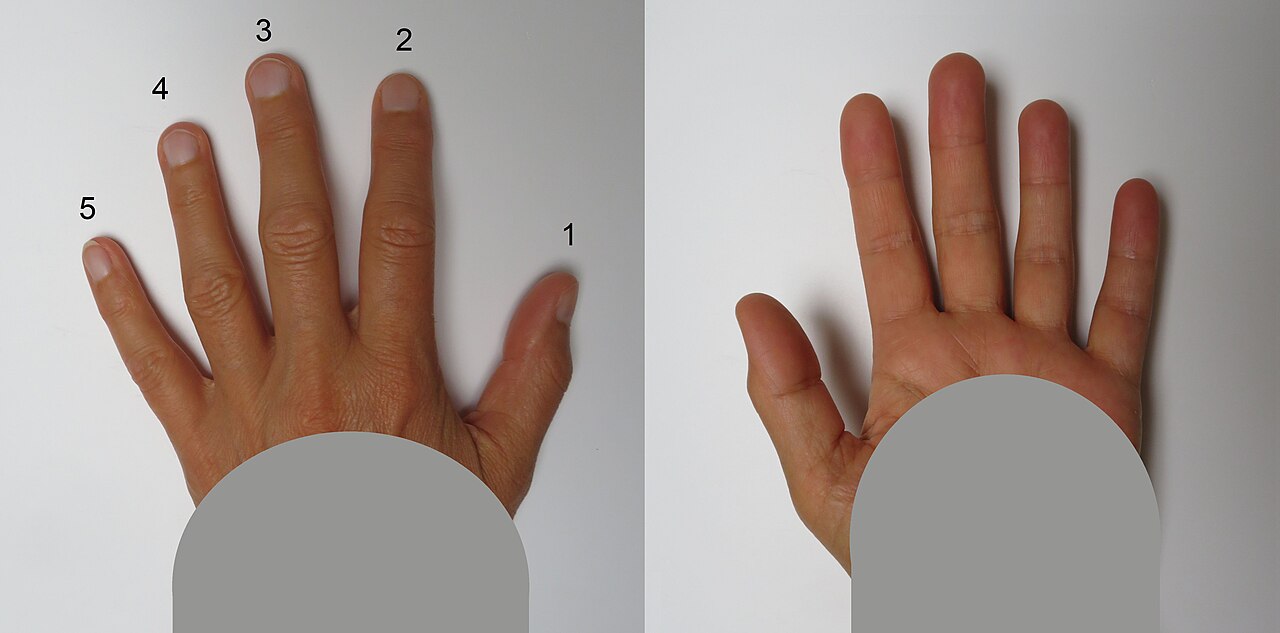
The humble finger, often taken for granted in its human form, represents one of evolution's most versatile and enduring anatomical innovations. Far from being exclusive to primates, these prominent digits grace the forelimbs of most tetrapod vertebrate animals, playing pivotal roles in everything from grasping and manipulation to locomotion and sensory perception. This comprehensive exploration delves into the intricate anatomy, fascinating evolutionary journey, and remarkable diversity of adaptations that make the vertebrate finger a cornerstone of biological success.
The Foundational Anatomy of Vertebrate Fingers
At its core, a finger is a terminal digit of a tetrapod limb, particularly prominent on the manus (forelimb). While humans typically associate fingers with their hands, the underlying skeletal structure is a conserved blueprint across diverse species. The fundamental building blocks are the bones known as phalanges, which are segmented and articulated to provide both flexibility and strength. Most tetrapods exhibit pentadactyly – the presence of five digits – a pattern that emerged hundreds of millions of years ago and remains a testament to evolutionary stability.
In humans, each of the four fingers (excluding the thumb, a distinction we'll explore further) consists of three phalanges: the proximal phalanx, which connects to the palm; the middle phalanx; and the distal phalanx, which carries the nail. The thumb, an exceptional digit for its unique capabilities, typically has only two phalanges: a proximal and a distal. These bones are interconnected by a series of hinge joints that facilitate a wide range of motion, primarily flexion and extension:
- Metacarpophalangeal Joint (MCP): Located at the base of the finger, where the proximal phalanx meets a metacarpal bone from the palm. These joints allow for both flexion/extension and some abduction/adduction, contributing significantly to the hand's versatility.
- Proximal Interphalangeal Joint (PIP): Situated between the proximal and middle phalanges.
- Distal Interphalangeal Joint (DIP): Found between the middle and distal phalanges.
The thumb's corresponding joints include the carpometacarpal joint (CMC) at its base, which provides its unique opposability, and an interphalangeal joint (IPJ). This intricate arrangement of bones and joints is supported by a complex network of muscles, tendons, and ligaments, all richly supplied with nerves and blood vessels. This biological sophistication allows for the fine motor control and acute tactile sensation that are critical to human dexterity. For instance, the human fingertip is packed with mechanoreceptors, making it an exquisite organ of touch, capable of discerning minute textures and temperatures.
The Role of Metacarpals and the Thumb's Special Status
Proximal to the phalanges in the hand are the metacarpal bones – five elongated bones forming the palm's framework. Each digit articulates with its corresponding metacarpal, creating the supportive structure necessary for robust gripping and precise manipulation. The first metacarpal, supporting the thumb, is uniquely structured to facilitate its remarkable range of motion and opposability.
The thumb's definitional status as a "finger" is a point of interesting semantic and anatomical debate. English dictionaries offer dual definitions: some include the thumb as one of the five fingers, while others consider "fingers" to refer exclusively to the four digits excluding the thumb. Anatomically, its two phalanges and distinct carpometacarpal joint set it apart, granting it unparalleled versatility. Regardless of definition, the thumb's ability to oppose the other digits is arguably the single most important factor in the dexterity of the human hand, differentiating us profoundly from many other species. To dive deeper into this fascinating debate, you can explore Is the Thumb a Finger? Exploring Definition and Anatomy.
The Evolutionary Journey of Digits: From Fins to Adaptive Forms
The story of the vertebrate finger is one of deep evolutionary time, tracing its origins back to the fins of ancient lobe-finned fish approximately 360 million years ago. The archetypal pentadactyl limb pattern, featuring five digits, emerged as a conserved developmental blueprint for crown-group tetrapods. This ancestral form, often characterized by a phalangeal formula like 2-3-4-5-3 (referring to the number of phalanges in digits 1 through 5, respectively, in basal forms), provided a flexible platform for an astonishing array of adaptations.
As vertebrates diversified and colonized various environments, the basic five-digit structure underwent profound modifications through natural selection. The beauty of this evolutionary journey lies in how a shared ancestral pattern could be so dramatically reshaped to suit specialized ecological niches:
- Primates (including Humans): Retention of pentadactyly with an emphasis on prehensile capabilities, flexible joints, and, crucially, an opposable thumb for fine motor control, grasping, and tool use.
- Birds: Fusion and reduction of digits to form the skeletal support for wings, optimizing for flight while retaining vestiges of their five-digit ancestry.
- Bats: Extreme elongation of several finger bones to support expansive wing membranes, transforming digits into primary structures for powered flight.
- Whales and Dolphins: Digits flattened and encased within fleshy flippers, adapted for aquatic locomotion. While externally appearing paddle-like, the underlying bone structure still reveals a five-digit pattern.
- Horses and Other Ungulates: Drastic reduction and fusion of digits, often leading to a single, weight-bearing digit encased in a hoof, an adaptation for high-speed terrestrial locomotion.
- Reptiles and Amphibians: Exhibit various forms, from splayed digits for climbing or sprawling locomotion to webbed feet for swimming.
This remarkable adaptive radiation demonstrates how a fundamental anatomical design can be tweaked and specialized over millions of years to meet the demands of survival in vastly different habitats and lifestyles. The underlying genetic pathways controlling digit development are incredibly ancient and robust, allowing for both remarkable stability and impressive plasticity.
Diverse Adaptations and Functional Roles of Fingers
The versatility of the vertebrate finger is truly astounding, serving a myriad of functions across the animal kingdom. While grasping and manipulation are often the first things that come to mind, digits are integral to far more:
- Prehension and Manipulation: This is perhaps the most celebrated function, epitomized by primate hands. Our fingers, with their flexible joints and fine motor control, enable us to grip, hold, climb, and intricately manipulate objects – from threading a needle to performing complex surgery.
- Locomotion:
- Climbing: Many arboreal animals, from monkeys to chameleons, rely on their strong, often curved fingers and claws for secure grip on branches.
- Running: The powerful digits of terrestrial predators provide traction and absorb impact, while the highly modified digits of ungulates are perfectly adapted for efficient, sustained running.
- Flight: As seen in bats and birds, fingers form the structural core of wings, enabling atmospheric travel.
- Swimming: Aquatic mammals like seals and manatees utilize their fin-like digits to propel themselves through water.
- Sensory Input: Especially in humans, the fingertips are richly endowed with nerve endings, making them crucial sensory organs. They provide detailed tactile feedback, allowing us to perceive texture, temperature, pressure, and vibration – essential for interacting safely and effectively with our environment.
- Defense and Offense: Claws on the fingers of many carnivores and some herbivores serve as formidable tools for hunting, tearing, or self-defense.
- Communication and Social Signaling: While less common, some species use specific finger gestures for communication, and in humans, fingers are indispensable for sign language and non-verbal cues.
Each of the human fingers also has specialized contributions to hand function. The thumb (pollex) provides unparalleled opposition and power. The index finger (digit 1) is ideal for pointing and fine precision tasks. The middle finger (digit 2) contributes to strength and overall reach. The ring finger (digit 3) and little finger (digit 4, or pinkie) are crucial for supporting a strong power grip and maintaining stability during manipulative tasks.
Variations and Anomalies: The Spectrum of Digit Structure
While the pentadactyl pattern is ancestral, the number and structure of fingers can vary significantly, both through evolutionary adaptation and developmental anomalies. These variations provide further insight into the flexibility of the digital blueprint:
- Polydactyly: A congenital condition resulting in more than the typical five digits on a hand or foot. This can range from a small extra bump to a fully formed extra digit, often inherited.
- Oligodactyly/Adactyly: The opposite of polydactyly, characterized by fewer than five digits, or even the complete absence of digits. These conditions can result from genetic factors or developmental issues during gestation.
- Syndactyly: Commonly referred to as "webbed fingers," this condition involves the fusion of two or more digits, either by skin (simple syndactyly) or bone (complex syndactyly).
- Brachydactyly: Characterized by abnormally short fingers or toes, often due to shortened phalanges.
From an evolutionary perspective, the reduction or loss of digits, as seen in horses or birds, is a powerful example of adaptation where fewer, more robust digits are advantageous for specific modes of locomotion. The human conditions, while often requiring medical intervention for functional or aesthetic reasons, are stark reminders of the complex genetic and developmental processes that sculpt our anatomy.
Conclusion
The vertebrate finger, in all its diverse manifestations, stands as a testament to evolution's ingenuity. From the humble three-phalange structure common in humans to the highly specialized adaptations seen in bats' wings or horses' hooves, digits have continuously evolved to meet the survival demands of countless species. They are fundamental to movement, sensation, and interaction with the environment, embodying a conserved anatomical heritage that has been refined and repurposed over hundreds of millions of years. Understanding the anatomy, evolution, and myriad adaptations of vertebrate fingers not only deepens our appreciation for biological diversity but also highlights the elegant interplay between form and function that underpins life on Earth.